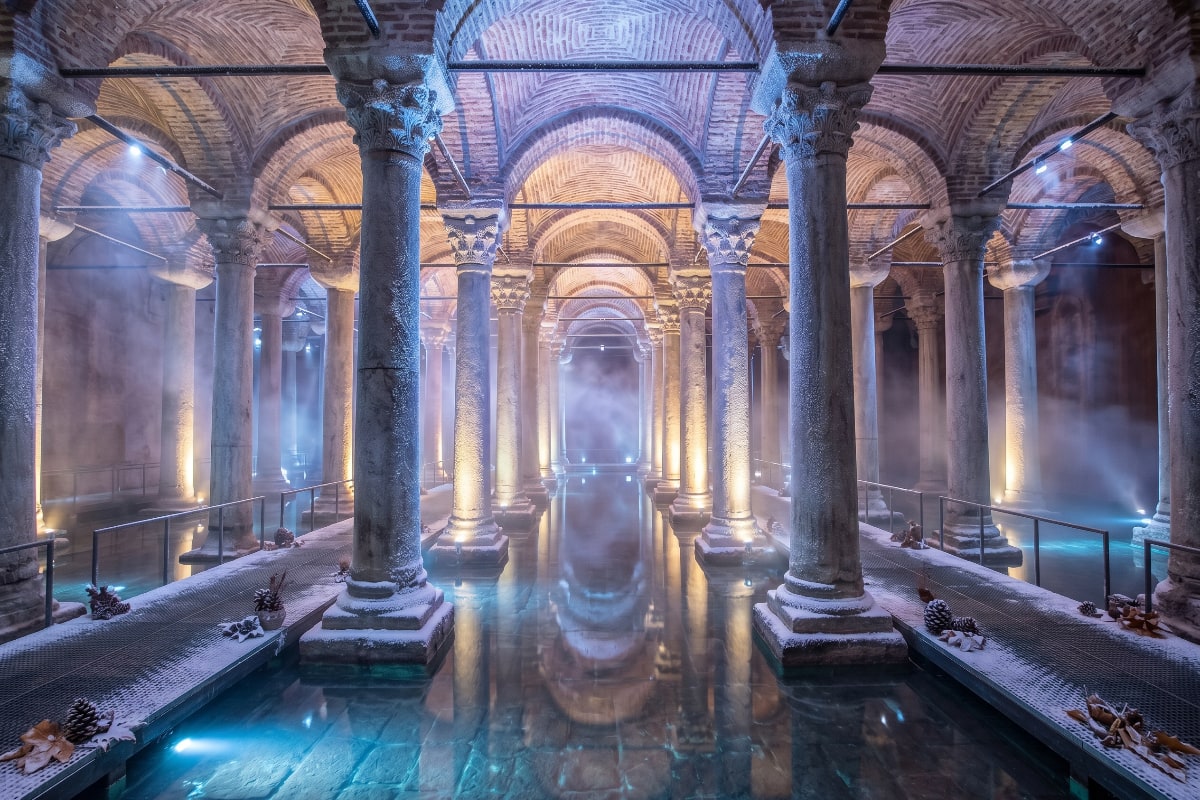
Discover why winter is the perfect season to explore Istanbul\'s underground treasures. From the famous Basilica Cistern to the atmospheric Binbirdirek, uncover the serenity and history hidden beneath the city streets.
Istanbul in winter is a city of distinct moods. As the crisp January air settles over the Bosphorus and a mystical fog occasionally wraps around the minarets of the Hagia Sophia, the city takes on a more contemplative, quiet character. While the streets may be cooler, there is a warmth and mystery waiting to be discovered beneath the cobblestones. For the discerning traveler in 2026, the true magic of the season lies not just in the skyline, but in the subterranean world of the city’s ancient cisterns. These architectural marvels, built centuries ago to store water for the Great Palace and the city's inhabitants, transform into serene sanctuaries during the winter months, offering an experience far removed from the bustling summer crowds.
Stepping off the chilly streets and descending the stone stairs into these underground palaces feels like entering a different dimension. The temperature stabilizes, the noise of modern traffic fades into a hushed silence, and the interplay of light and water creates an atmosphere that is nothing short of enchanting. Winter provides the perfect backdrop for this exploration, allowing you to appreciate the grandeur of Roman and Byzantine engineering in solitude. Without the long queues and the rush of peak tourism, you can truly connect with the history etched into every marble column and vaulted ceiling.
The Serenity of the Subterranean: Why Visit in Winter?
There is a specific acoustic quality to Istanbul’s cisterns that can only be fully appreciated when the halls are not packed with visitors. In the height of summer, the echo of hundreds of voices can sometimes mask the gentle sound of dripping water—the very heartbeat of these structures. However, visiting in January allows for a much more intimate experience. The silence is profound, broken only by the soft splash of water or the distant echo of your own footsteps. This solitude turns a simple sightseeing trip into a meditative journey through time.
Furthermore, the visual contrast is striking. After walking through the gray, sometimes rainy ambiance of a winter day in Istanbul, the warm, amber lighting used to illuminate the columns creates a cozy, almost protective environment. It is a refuge in every sense of the word. The humidity underground feels comforting against the dry winter air, and the shadows cast by the columns seem to dance more slowly, inviting you to linger and observe details that you might otherwise miss in a hurried summer tour.
The Basilica Cistern: The Sunken Palace
Undoubtedly the most famous of them all, the Basilica Cistern (Yerebatan Sarnıcı) takes on a particularly mystical aura during the off-peak season. Built by Emperor Justinian I in the 6th century, this vast underground chamber is supported by 336 marble columns, each rising from the water like a petrified forest. In winter, the walkways are less congested, giving you the space to lean over the railings and watch the carp glide silently through the shallow waters below.
The highlight of any visit here is the journey to the far corner of the cistern to witness the two Medusa heads used as column bases. In the quiet of winter, staring into the eyes of these mythological Gorgons feels more intense, as if the legends of the past are whispering directly to you. The lighting system, which has been refined in recent years, highlights the texture of the ancient bricks and the ripples in the water, creating a photographer's paradise. Without the pressure to keep moving for the next group, you can take your time to capture the perfect reflection of the columns on the still water surface.
Şerefiye Cistern: A Symphony of Light and History
While the Basilica Cistern impresses with its sheer scale, the Şerefiye Cistern (Theodosius Cistern) captivates with its elegance and modern presentation. This structure is slightly older than the Basilica and has been meticulously restored to host one of the most stunning light mapping shows in the city. Winter is the ideal time to experience this, as the enclosed nature of the show provides a warm, immersive escape from the cold outdoors.
The 360-degree projection mapping show brings the history of the cistern and Istanbul to life, painting the walls and columns with vivid colors and historical narratives. The acoustics here are exceptional, and the winter quiet enhances the auditory experience of the classical music that accompanies the visual display. It is a fusion of 1,600-year-old architecture and cutting-edge technology. Because it is an indoor, seated or standing experience depending on the event, it serves as a perfect interlude during a day of walking around the Sultanahmet district.
Binbirdirek Cistern: The Dry Giant
For those looking to explore something slightly off the beaten path, the Binbirdirek Cistern (Cistern of Philoxenos) offers a unique perspective. Unlike its water-filled counterparts, Binbirdirek is often dry, allowing visitors to walk on the original floor and appreciate the colossal height of the columns from their very base. This cistern is the second largest in Istanbul and is often used for art exhibitions and events.
In the winter months, the atmosphere inside Binbirdirek is incredibly moody and atmospheric. The absence of water changes the acoustic profile entirely, creating a hollow, vast sound that emphasizes the emptiness and scale of the space. It feels like a secret underground cathedral. The columns here are unique, composed of two superposed drums bound by a marble ring, a detail that is easier to inspect up close when the floor is accessible. It is a favorite spot for photographers who want to play with shadow and silhouette without the challenge of water glare.
Planning Your Winter Cistern Tour
To make the most of your underground exploration in January 2026, a little planning goes a long way. While the crowds are thinner, these sites are still popular, and maximizing your comfort is key. Here are a few tips to enhance your journey:
- Dress in Layers: While it is cold outside, the cisterns have a stable, humid temperature. You might find yourself feeling warm after walking down the stairs, so having a coat you can easily unbutton is helpful.
- Wear Non-Slip Shoes: The walkways in places like the Basilica Cistern can be damp. Sturdy, comfortable footwear is essential for navigating the dim paths safely.
- Timing Matters: Even in winter, weekends can attract locals. Try visiting on a weekday morning right after opening time for the most solitary experience.
- Photography Gear: Flash is usually prohibited or discouraged to preserve the atmosphere. Bring a camera with good low-light capability or a smartphone with a steady 'night mode'.
Comparing the Underground Giants
Each cistern offers a different slice of history and atmosphere. Below is a quick comparison to help you prioritize your visits based on what you are seeking:
| Cistern Name | Key Feature | Winter Atmosphere | Best For |
| Basilica Cistern | Medusa Heads & Water Reflections | Mystical & Reflective | First-time visitors & Photography |
| Şerefiye Cistern | 360° Light Mapping Show | Immersive & Artistic | History buffs & Visual art lovers |
| Binbirdirek Cistern | Dry Floor & Tall Columns | Hollow & Grand | Architecture enthusiasts & Events |
A Hidden Wonderland Awaits
Istanbul is a city that rewards the curious, and nowhere is this more evident than in its subterranean layers. The winter season strips away the frantic energy of tourism, leaving behind a raw, authentic connection to the past. Whether you are mesmerized by the upside-down head of Medusa, enchanted by the dancing lights of Şerefiye, or humbled by the towering columns of Binbirdirek, these spaces offer a sanctuary of wonder.
As you ascend back to the surface, blinking against the grey winter light of modern Istanbul, you carry with you the silence and secrets of the Byzantine empire. It is a reminder that beneath the chaotic beauty of the city lies a calm, enduring foundation that has weathered centuries of winters, waiting for you to discover it.