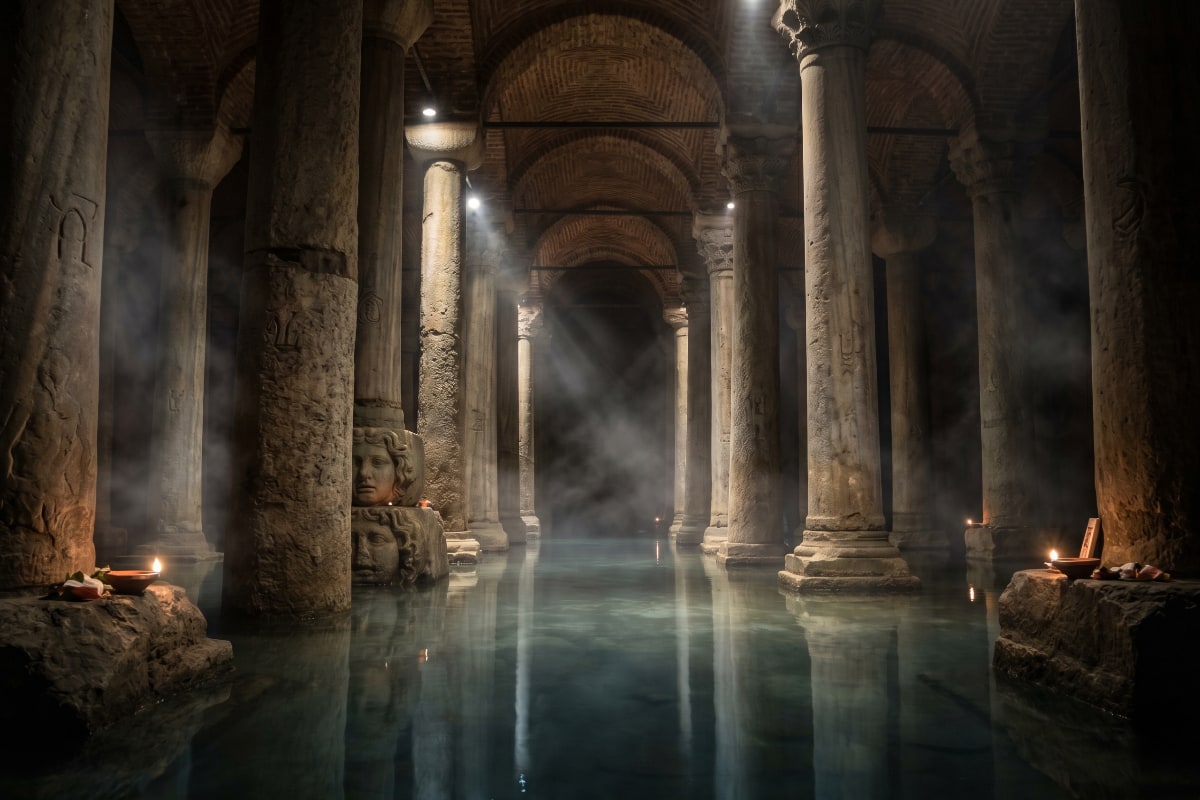
Journey beneath the streets of Istanbul to discover the haunting legends and ancient myths surrounding the Basilica, Binbirdirek, and Şerefiye cisterns. From Medusa\'s stone gaze to the tears of forgotten slaves, explore the stories that bring these subterranean wonders to life. Also, get practical information for visiting these sites today.
Istanbul is a city where history is layered like the pages of a weathered book, but some of its most compelling stories are not found in the soaring minarets or the bustling bazaars. Instead, they echo in the cool, damp darkness beneath the city streets. The ancient subterranean water reservoirs of Constantinople are engineering marvels, certainly, but for the imaginative traveler, they are also repositories of myth, tragedy, and magic. When you descend into these watery halls, you aren't just looking at columns and arches; you are stepping into a realm where history bleeds into legend. As we navigate through January 2026, the allure of these underground palaces remains as potent as ever, drawing visitors who seek to hear the whispers of the past.
The atmosphere in these cisterns is distinct from anywhere else in the city. The air is heavy with humidity, the light plays tricks on your eyes, and the sound of dripping water creates a rhythmic, almost hypnotic soundtrack. It is easy to understand why the Byzantines and Ottomans alike attributed supernatural qualities to these spaces. Whether it is the fear of being turned to stone or the sorrow of enslaved builders, the folklore attached to these sites transforms a simple architectural visit into an emotional journey through time.
The Tears of the Slaves: Basilica Cistern (Yerebatan Sarnıcı)
Undoubtedly the most famous of all underground structures, the Basilica Cistern is a cathedral of shadows that has captivated imaginations for centuries. Built by Emperor Justinian I in the 6th century, its sheer scale suggests a power that transcends mere human effort. However, the legends here are not just about emperors; they are about the common people who suffered to build it. One of the most poignant stories revolves around the "Crying Column" or the "Hen's Eye Column." Unlike the other smooth or fluted pillars, this specific column is engraved with teardrop shapes and remains perpetually wet.
Local legend insists that the column is weeping for the hundreds of slaves who died during the construction of the Great Basilica. Visitors often touch the damp stone, feeling a connection to those anonymous laborers from antiquity. It is said that if you make a wish while your thumb rotates in the hole of this column, your wish might be granted, but the underlying sorrow of the myth adds a layer of solemnity to the ritual. The column stands as a permanent memorial, a weeping witness to the cost of imperial grandeur.
Visiting Today: The Basilica Cistern is open to the public daily. As of January 2026, tickets can be purchased online or at the entrance. Expect crowds, especially during peak tourist season. Consider visiting early in the morning or later in the afternoon to avoid the busiest times. Photography is allowed, but flash photography is often discouraged to preserve the delicate ecosystem within.
The Gaze of the Gorgon: Medusa's Mystery
Perhaps the most enduring myth of the underground world concerns the two giant Medusa heads used as plinths for columns in the northwest corner of the cistern. One head lies sideways, the other upside down. While archaeologists argue that this was a practical use of Roman "spolia" (reused building materials) to level columns of different lengths, folklore offers a far more sinister explanation. In Greek mythology, Medusa was a Gorgon whose gaze could turn any living thing to stone. The Byzantines, despite being Christian, were deeply superstitious and often repurposed pagan symbols for protection.
The legend suggests that the heads were placed in these disoriented positions to negate the power of the Gorgon's gaze. By placing her upside down or sideways, the builders believed they were stripping her of the ability to harm the city or the water supply. Walking to the far end of the cistern to meet these stone eyes is a highlight for many. Even today, standing before the snake-haired visage in the dim light, one can feel a primal shiver, understanding why the ancients felt the need to neutralize such a potent symbol of chaos.
The Enigma of the 1001 Columns: Binbirdirek Cistern
While the Basilica Cistern gets the lion's share of attention, the Binbirdirek Cistern holds its own unique mystique. The name itself, translating to "1001 Columns," is a mythic exaggeration that speaks to the awe the structure inspired. In reality, there were originally 224 columns, but the name "Binbirdirek" implies an infinite, countless forest of stone. This cistern, also known as the Cistern of Philoxenos, has a drier, more cavernous atmosphere that lends itself to different kinds of stories.
Legends surrounding Binbirdirek often focus on its periods of abandonment. For centuries, the location of this cistern was lost to the general public, and it was rediscovered essentially by accident. During the Ottoman era, it was sometimes used by silk spinners. The cool, consistent temperature was perfect for working with delicate threads, but the workers would often tell tales of the "djinn" (spirits) that inhabited the dark corners where the lantern light couldn't reach. The vast, empty spaces between the columns, which are taller than those in the Basilica, create an echo chamber where a whisper can sound like a shout, fueling stories of ghostly conversations held by the spirits of old Constantinople.
Visiting Today: Binbirdirek Cistern offers a different experience than the Basilica. It's often less crowded, allowing for a more contemplative visit. Check the official website for current opening hours and ticket prices. The cistern is well-lit, making it easier to appreciate the architecture. Guided tours are available and can provide deeper insights into its history and legends.
The Aristocratic Secret: Şerefiye Cistern
The Şerefiye Cistern, or Theodosius Cistern, is the oldest of the three major accessible cisterns, yet it feels like the newest discovery for many travelers. For years, it was hidden beneath a municipal building, its existence known but its grandeur obscured. The myths here are less about monsters and more about the hidden layers of the city. It represents the "buried treasure" aspect of Istanbul mythology—the idea that beneath any random building, a palace might be waiting.
The legend of Şerefiye is closely tied to the sheer opulence of the Theodosian era. Unlike the utilitarian nature of some water storage, this cistern was built with a level of aesthetic care that suggests it was meant to be seen, or at least, that the water itself was revered as a divine gift. Today, the modern 360-degree projection mapping shows performed here lean into this mythological past. They use light and sound to resurrect the history of the walls, effectively creating a modern mythology where digital art meets ancient stone. It bridges the gap between the historical reality and the legendary status of the city's water sources.
Visiting Today: Şerefiye Cistern is known for its immersive light shows and digital art installations. Check the schedule for showtimes and book tickets in advance, as they can sell out quickly. The cistern is easily accessible and offers a unique blend of history and modern technology. It's a great option for those looking for a visually stunning and engaging experience.
Comparing the Underground Legends
To help you understand the distinct "personality" of each cistern and its associated lore, here is a quick breakdown of what makes each unique in the tapestry of Istanbul's myths:
| Cistern Name | Key Myth/Symbol | Atmosphere | The "Vibe" |
| Basilica Cistern | Medusa Heads & Crying Column | Wet, dark, crowded, mystical | The haunted palace of a sunken kingdom. |
| Binbirdirek Cistern | The "1001" Exaggeration | Dry, vast, echoing, hollow | A silent, forgotten hall of giants. |
| Şerefiye Cistern | Hidden Treasure / Theodosian Glory | Polished, artistic, illuminated | An elegant secret revealed to the chosen few. |
Common Motifs in Subterranean Folklore
When exploring these sites, you will notice recurring themes in the stories told by guides and locals. The underground world of Istanbul has always been a canvas for the human imagination. The darkness necessitates stories to fill the void. Here are a few common motifs you might encounter:
- Secret Tunnels: A persistent urban legend claims that all the major cisterns are connected by secret tunnels that lead to the Hagia Sophia or even under the Bosphorus to the Asian side. While hydraulic systems were connected, the idea of walkable secret passages remains a romantic myth.
- Guardian Spirits: Water is life, but deep, standing water is also dangerous. Many old stories warn of spirits guarding the water to prevent it from being poisoned or stolen during sieges.
- Buried Gold: Before they were fully excavated and restored as museums, these cisterns were often subjects of treasure hunter folklore, with rumors of Byzantine gold hidden in the silt at the bottom.
Why These Myths Matter for Your Visit
You might wonder, why do these old stories matter in 2026? The answer lies in the emotional connection they foster. Knowing the legend of the weeping slaves changes the way you look at a damp column. Understanding the fear of Medusa changes the way you approach a stone block. These myths transform a sightseeing trip into an act of witnessing. They remind us that these structures were built by people who feared, loved, and hoped, just as we do.
When you visit, take a moment to turn off your internal commentary and just listen. Watch the reflections in the water. Whether you are exploring the vastness of the Basilica Cistern, the height of Binbirdirek, or the elegance of Şerefiye, you are participating in a story that has been unfolding for 1,500 years. The water may have receded in some places, but the legends flow as strongly as ever.