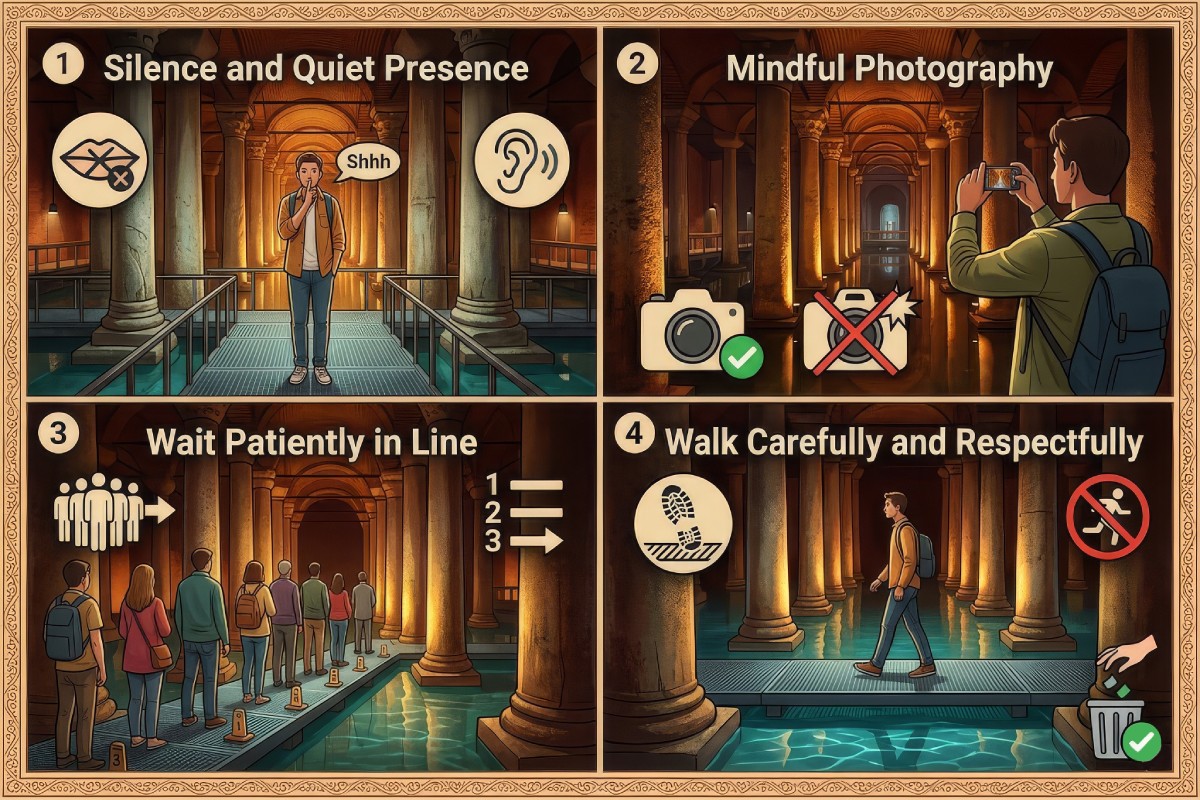
Discover the essential rules of conduct for visiting Istanbul\'s historic underground cisterns. From mastering low-light photography without flash to maintaining the acoustic sanctity of these ancient spaces, and understanding specific cistern nuances, this guide ensures a respectful and memorable experience for every traveler.
Stepping into the subterranean world of Istanbul is like entering a time capsule where the chaotic energy of the modern city above fades into the rhythmic, meditative sound of dripping water. These architectural marvels, built by Byzantine engineers over a millennium ago, offer a serene escape that is quite unlike any other museum or historical site you will visit in Turkey. However, the unique atmosphere of these underground reservoirs—characterized by dim lighting, high humidity, and incredible acoustics—requires a specific set of unwritten rules to ensure preservation and enjoyment for everyone. As we navigate the travel landscape of 2026, being a responsible visitor is more important than ever, ensuring these delicate structures remain pristine for future generations.
When you descend the stairs into these cavernous spaces, your eyes need a moment to adjust to the amber glow illuminating hundreds of ancient columns. It is in this transition that the importance of etiquette becomes apparent; a loud voice or a sudden camera flash can instantly shatter the mystical ambiance that makes these locations so special. Understanding how to navigate these spaces respectfully not only protects the heritage site but also enhances your own connection to history. Whether you are a solo backpacker, a family on vacation, or a photography enthusiast, adhering to these guidelines will help you blend in seamlessly with the solemn beauty of the underground.
The Atmosphere of Silence: Managing Noise Levels
The most striking feature of Istanbul’s cisterns is their acoustic properties, which were originally designed to hold water, not to dampen sound. In vast, cavernous spaces like the Basilica Cistern, sound waves bounce off the water and the vaulted brick ceilings, amplifying even the quietest conversations into a rolling echo. When hundreds of visitors are present, a collective murmur can quickly escalate into a roar if individuals do not make a conscious effort to lower their voices. It is widely accepted that these spaces function almost like libraries or places of worship; silence or hushed whispers are the standard to maintain the eerie, contemplative mood that visitors travel thousands of miles to experience.
For families traveling with children, this environment presents a unique teaching opportunity about history and respect, though it can be challenging. Parents should prepare their little ones beforehand, explaining that this is a "whisper zone" where they can play the game of being secret explorers. Running is strictly prohibited, not only for safety reasons due to slippery floors but also because the sound of stomping feet travels aggressively through the metal walkways. If you are visiting as part of a large tour group, try to stay close to your guide and use headsets if provided, rather than shouting questions across the columns.
Mastering Low-Light Photography Without Disruption
Capturing the haunting beauty of the cisterns is a priority for almost every visitor, but the lighting conditions present specific challenges that often lead to poor etiquette. The golden rule of cistern photography is simple: never use a flash. Not only does a sudden burst of bright light ruin the carefully curated atmospheric lighting for everyone else, but it also flattens your image, removing the shadows and depth that make the cisterns photogenic in the first place. Furthermore, constant flashing can be visually aggressive to other visitors whose eyes have adjusted to the dark, causing temporary blindness and disorientation on the narrow walkways.
Instead of relying on flash, modern travelers should utilize the high ISO capabilities of their cameras or the "night mode" features on smartphones. If you are visiting the Şerefiye Cistern (Theodosius Cistern), you will likely witness stunning 360-degree projection mapping shows. During these light installations, it is crucial to keep your screen brightness down and avoid holding your device above your head, which blocks the view for the people standing behind you. While tripods are generally excellent for low light, they are often prohibited or discouraged in these spaces because they obstruct the flow of foot traffic on the limited walkways. A steady hand and patience are your best tools here.
Navigating Walkways and respecting Personal Space
The infrastructure within these ancient reservoirs has been modernized with raised platforms and metal walkways to keep visitors dry and safe. However, these paths are often narrow, creating bottlenecks during peak tourist seasons. It is essential to treat these walkways like a two-lane road; always keep to the right to allow traffic to flow in the opposite direction. If you wish to stop and admire a specific column, such as the Medusa heads, or take a photograph, ensure you step to the side or find a wider section of the platform so you do not block the path for others. Sudden stops in the middle of a walkway can cause collisions, especially in the dim light.
In less crowded but equally majestic locations like the Binbirdirek Cistern, you might have more room to roam, but the principle of spatial awareness remains the same. Be mindful of your surroundings and avoid leaning heavily on railings or barriers. These structures are there for your safety, but leaning over them to get a better angle can be dangerous and may trigger alarms in certain secured areas. Additionally, be aware of your backpack or large bags; in tight turns, it is easy to accidentally bump into other visitors or brush against ancient brickwork if you are not careful.
Preservation of Heritage: Look but Don't Touch
It can be incredibly tempting to reach out and touch the damp, cool stone of a column that has stood for over 1,500 years, but strictly refraining from physical contact is a cornerstone of cistern etiquette. The oils, sweat, and acids naturally present on human skin can react with the porous stone and brick, leading to gradual degradation over time. When thousands of people touch the same spot daily, the cumulative damage can be irreversible, eroding inscriptions and changing the color of the masonry. We are merely guests in these ancient structures, and our goal should be to leave no trace of our presence.
To help you visualize the impact of your actions, here is a quick guide on how to interact with the environment:
| Aspect | Respectful Behavior (Do's) | Disruptive Behavior (Don'ts) |
| Physical Contact | Admire the texture and carvings with your eyes only. | Touching columns, splashing water, or leaning on ancient walls. |
| Trash & Waste | Keep all trash in your pocket until you exit the venue. | Dropping tickets, gum, or plastic bottles into the water or walkways. |
| Water Interaction | Observe the fish (if present) from a distance. | Throwing coins into the water (unless designated) or feeding fish. |
Dress Code and Comfort Considerations
Unlike entering a mosque where headscarves and modest attire are mandatory rules, cisterns generally do not have a strict religious dress code. However, practical and respectful dressing is highly recommended for a comfortable visit. The environment is perpetually damp and cool, even in the height of Istanbul's sweltering summer. Bringing a light jacket or a shawl is a smart move to avoid shivering while you explore. More importantly, footwear plays a critical role in your safety; the high humidity can make metal walkways and stone floors slippery. High heels are strongly discouraged as they can get stuck in walkway grates and offer poor stability on wet surfaces.
Etiquette During Cultural Events
Many of Istanbul's cisterns have evolved into cultural hubs that host classical music concerts, art exhibitions, and light shows. If you are attending such an event, the etiquette shifts slightly to that of a theater or concert hall. Silence becomes absolute during performances to allow the natural acoustics to carry the music. Mobile phones should be turned off or set to silent mode completely—vibration sounds are amplified on metal platforms. If you are visiting specifically for a light projection show, find a spot early and stay put; moving around during the show disrupts the visual narrative for others and ruins the immersive experience intended by the artists.
Specific Cistern Considerations: While the Basilica Cistern is known for its Medusa heads and grand scale, be aware that it can get extremely crowded. Consider visiting during off-peak hours (early morning or late afternoon) for a more peaceful experience. The Binbirdirek Cistern, being less crowded, offers a more intimate experience. However, its lighting is dimmer, so allow your eyes more time to adjust. The Şerefiye Cistern, with its modern light shows, has specific rules regarding photography during the projections – always follow the instructions given by the staff.
Practical Tips for a Smooth Visit: Before entering, check the official website for any temporary closures or special events that might affect your visit. Carry a small bottle of hand sanitizer, as touching railings is sometimes unavoidable. If you have mobility issues, inquire about accessibility options beforehand, as not all cisterns are fully accessible. Finally, be patient and understanding; these are popular tourist destinations, and occasional delays or crowding are to be expected.
Summary: The Modern Traveler's Responsibility
Ultimately, visiting the underground treasures of Istanbul is a privilege that comes with the responsibility of preservation. By keeping your voice low, managing your photography habits, and respecting the physical structure, you contribute to a sustainable tourism model that keeps these sites open and magical. The cisterns are places of mystery and shadow; they ask only for your quiet admiration in return for the awe-inspiring sights they provide. As you step back out into the daylight of the city, you will carry with you not just photos, but the memory of a profound, peaceful encounter with history.