Embark on a journey through time as we explore the architectural evolution of Istanbul. From the subterranean mysteries of Byzantine cisterns to the soaring minarets of the Ottoman era and the cutting-edge designs of the modern metropolis, including Zorlu Center and Varyap Meridian Grand Tower, discover the structures that define this transcontinental city.
Standing on the shores of the Bosphorus in January 2026, one cannot help but feel overwhelmed by the sheer density of history layered upon this unique geography. Istanbul is not merely a city; it is an open-air museum where empires have risen and fallen, leaving behind a stone-carved diary of their existence. The skyline tells a story of transformation, where Roman engineering meets Ottoman grandeur, and where historic peninsulas gaze across the water at glittering modern skyscrapers. To walk these streets is to traverse millennia, witnessing a dialogue between East and West that has shaped the architectural identity of the entire world.
The city's architectural fabric is woven from three distinct yet interconnected threads: the robust, brick-and-mortar legacy of the Byzantines; the elegant, dome-centric silhouette of the Ottomans; and the glass-and-steel ambition of the contemporary Turkish Republic. Understanding Istanbul requires looking beyond the surface. It involves gazing up at the massive domes that defy gravity and looking down into the depths where ancient water systems still flow. This guide takes you through the architectural timeline of a city that has mastered the art of reinvention while fiercely guarding its heritage.
The Byzantine Legacy: Domes and Subterranean Secrets
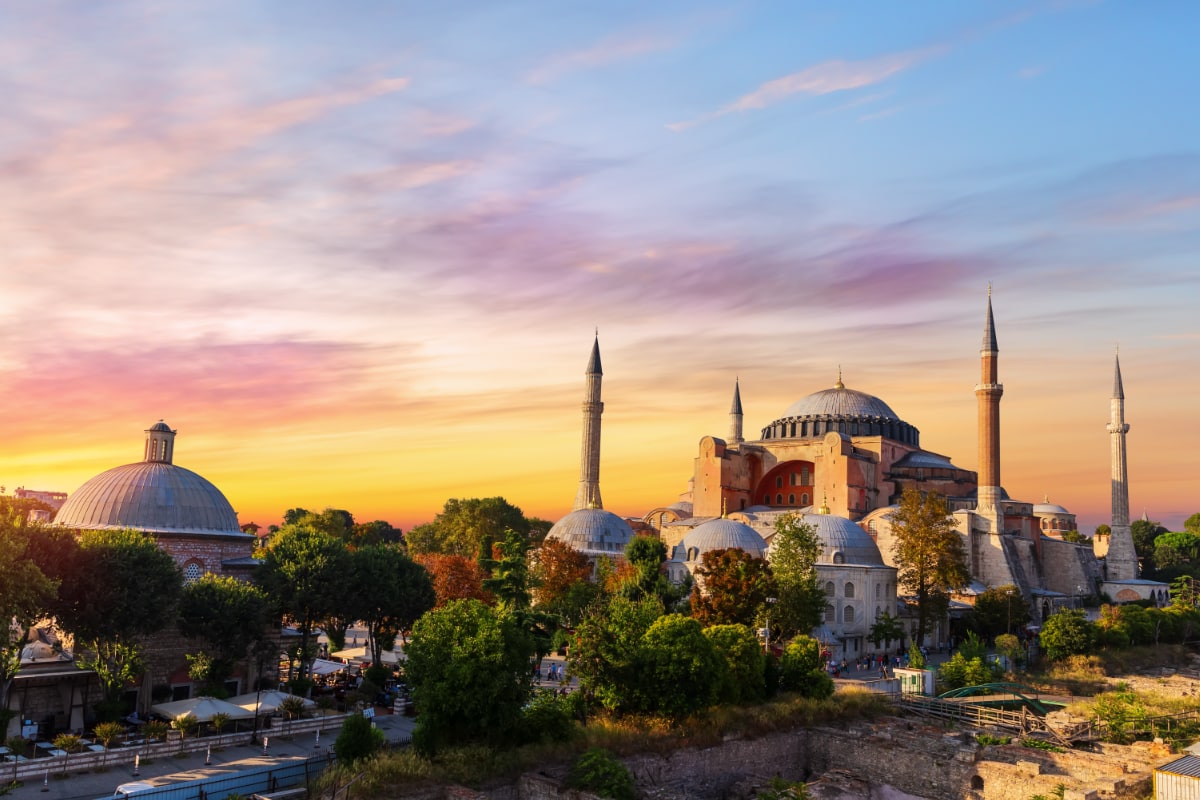
Before the minarets pierced the sky, Constantinople was a city of churches, forums, and unparalleled Roman engineering. The Byzantine influence is characterized by the use of brick, intricate mosaics, and the revolutionary use of the pendentive dome, most famously realized in the Hagia Sophia. This structure, which has served as a cathedral, a mosque, a museum, and a mosque again, remains the ultimate prototype of Byzantine architecture. Its massive central dome, seeming to float on a ring of light, changed the course of architectural history, influencing designs for centuries to come.
However, some of the most impressive Byzantine feats are not found in the skyline, but hidden beneath the city streets. The Great Palace and the civic needs of Constantinople required a sophisticated water management system that resulted in the construction of monumental underground reservoirs. These were not mere storage tanks; they were architectural marvels in their own right, utilizing hundreds of recycled columns from pagan temples.
Travelers looking to understand the scale of Byzantine engineering must venture underground. The most famous of these is undoubtedly the Basilica Cistern, known locally as the Sunken Palace. Walking along its raised platforms, surrounded by 336 marble columns rising from the water, creates an atmosphere of eerie beauty that is unmatched elsewhere in the city. Yet, the underground network is vast. The Binbirdirek Cistern, or the Cistern of Philoxenos, offers a different perspective as the second-largest covered cistern in the city, showcasing the immense capacity required to sustain the ancient capital. For those seeking a fusion of history and art, the Şerefiye Cistern (Theodosius Cistern) provides a meticulously restored example where the interplay of light and ancient stone columns creates a mesmerizing visual experience.
The Ottoman Silhouette: Minarets Piercing the Sky
Following the conquest of 1453, the architectural language of the city shifted dramatically. The Ottomans brought with them a tradition that evolved from Seljuk roots but blossomed fully when confronted with the majesty of Hagia Sophia. The result was the Classical Ottoman style, defined by cascading domes, semi-domes, and slender pencil minarets that give Istanbul its iconic silhouette today. The master architect Mimar Sinan is the protagonist of this era, having designed hundreds of structures that balanced mathematical precision with aesthetic grace.
The Süleymaniye Mosque is often cited as the pinnacle of this era, sitting atop the Third Hill and dominating the Golden Horn. Unlike the heavy masonry of earlier eras, Ottoman mosques sought to bring light inside, creating vast, airy prayer halls that felt celestial. The Blue Mosque (Sultanahmet Camii) sits directly opposite Hagia Sophia, engaging in a visual conversation with its predecessor. Its six minarets and cascading domes demonstrate the Ottoman desire to not just match, but surpass the architectural feats of the past. Beyond religious buildings, the Topkapi Palace offers a different architectural narrative—a sprawling complex of pavilions and courtyards that prioritizes harmony with nature over vertical monumentality.
Key Characteristics of Ottoman Architecture
- Centralized Plans: A focus on a massive central dome supported by semi-domes.
- Pencil Minarets: Tall, slender towers with conical caps, distinct from the square towers of North Africa or the onion domes of the East.
- Iznik Tiles: The interior decoration often features elaborate ceramic tiling with floral and geometric motifs, predominantly in turquoise and blue.
- Külliye Complexes: Mosques were rarely built alone; they were the center of social complexes including schools, kitchens, and baths.
Bridging the Gap: 19th Century Eclecticism
As the 19th century approached, the Ottoman Empire began to look Westward for inspiration, leading to a fascinating period of architectural eclecticism. This era moved away from the classical Ottoman style and embraced Baroque, Rococo, and Neoclassical influences, blending them with traditional motifs. The Dolmabahçe Palace is the crowning jewel of this shift. Stretching along the Bosphorus, it rejects the pavilion style of Topkapi in favor of a monolithic, European-style palace layout, yet the interior remains distinctly Ottoman in its separation of public and private quarters.
Across the Golden Horn, the district of Pera (now Beyoğlu) developed a distinctly European character. The Art Nouveau apartments lining Istiklal Street and the Genoese-built Galata Tower (which received its conical roof during the Ottoman period) showcase a cosmopolitan flair. This area represents the bridge between the ancient imperial capital and the modern republic, offering a visual texture that feels more like Paris or Vienna than the mystical East.
Contemporary Istanbul: A New Skyline
In 2026, Istanbul is not resting on its historical laurels. The city has aggressively pursued modernism, resulting in a skyline that rivals global business hubs. The Levent and Maslak districts are characterized by glass skyscrapers that reflect the changing economic status of the country. However, the most successful modern architecture in Istanbul is that which respects its context. The new Istanbul Modern museum at Galataport and the reimagined Atatürk Cultural Center (AKM) in Taksim Square are prime examples of contemporary design that integrates with the cultural fabric of the city.
These modern marvels prioritize function, light, and public space, often utilizing materials that nod to the past while looking firmly toward the future. The juxtaposition is striking: one can stand on the rooftop of a hyper-modern office tower and still hear the call to prayer echoing from 500-year-old minarets below. This blend is what prevents Istanbul from becoming a generic metropolis; the soul of the city remains intact even as its facade evolves.
Beyond the Istanbul Modern and AKM, other notable examples of contemporary architecture include the Zorlu Center, a mixed-use complex that combines residences, offices, a shopping mall, and a performing arts center, showcasing a blend of functionality and aesthetic appeal. The Varyap Meridian Grand Tower, with its sleek, curved design, stands as a testament to modern residential architecture. Additionally, many renovated historical buildings, such as boutique hotels and cultural centers in the Karaköy district, demonstrate a sensitive approach to preserving the past while incorporating modern design elements. These projects reflect a growing trend of sustainable and context-aware architecture that aims to enhance the urban environment and create vibrant public spaces.
Architectural Styles at a Glance
To help you identify what you are seeing as you wander the streets, here is a quick comparison of the three dominant styles:
| Feature | Byzantine | Ottoman | Modern/Contemporary |
| Primary Materials | Red brick, mortar, marble columns | Limestone, lead (for domes), Iznik tiles | Steel, glass, reinforced concrete |
| Dominant Form | Basilicas, heavy domes on pendentives | Cascading domes, slender minarets | Vertical skyscrapers, geometric shapes |
| Key Example | Hagia Sophia, Basilica Cistern | Blue Mosque, Topkapi Palace | Istanbul Modern, Sapphire Tower |
Conclusion: A City of Endless Discovery
Exploring Istanbul's architecture is an exercise in time travel. The city does not hide its scars or its triumphs; it wears them proudly in stone, brick, and glass. Whether you are descending into the cool, dimly lit depths of the Şerefiye Cistern to witness the engineering prowess of late antiquity, or standing in the shadow of the Galata Tower watching the ferries cross the Bosphorus, you are participating in a story that has been unfolding for thousands of years.
For the traveler in 2026, the beauty of Istanbul lies in this chaotic harmony. It is a place where a high-speed metro line runs beneath ancient city walls and where trendy rooftop bars offer views of mosques built by sultans. To understand Istanbul, you must look at it from all angles: from the bottom of its cisterns to the peaks of its skyscrapers. Only then can you truly appreciate the architectural wonder that is this city.